

Project overview: Learning about the process of finding work in Ontario for People with disabilities
The ministry of Labour, Immigration, Training and Skills Development (MLITSD) of Ontario is responsible for “supporting skilled trades and employment services, attracting highly-skilled newcomers and helping people get settled in Ontario” (source).
Within the year of bringing this project to us, MLITSD had amalgamated a number of employment services into one service. As a result of that change, they wanted to know if the change in structure was helpful to people -- specifically for people with disabilities (PwD).
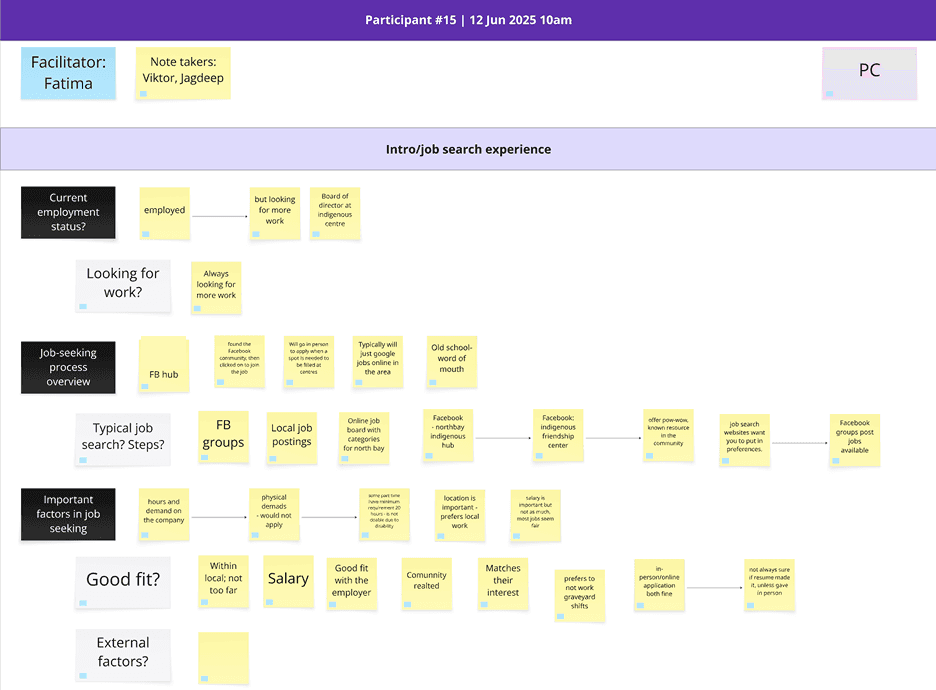
This case study focuses specifically on the steps we took to engage with people with disabilities to learn about their experiences as it pertains to planning, recruitment and interviewing.
Key process: conducting research for people with disabilities
Gathering project background
Of course, the first thing we decided to do was understand the problem space. We ran a couple of workshops with our client team (MLITSD) to understand:
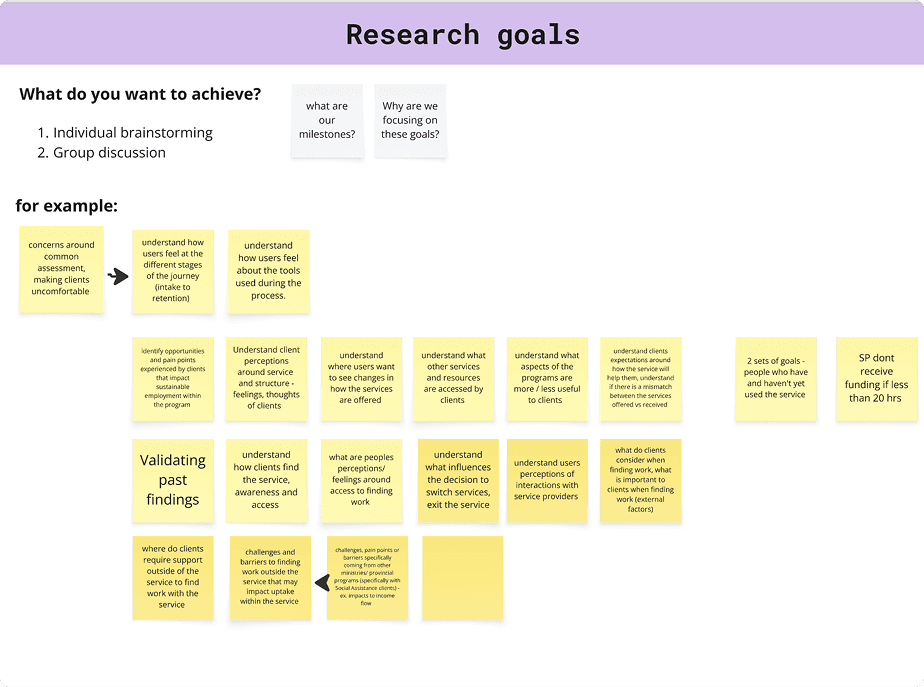
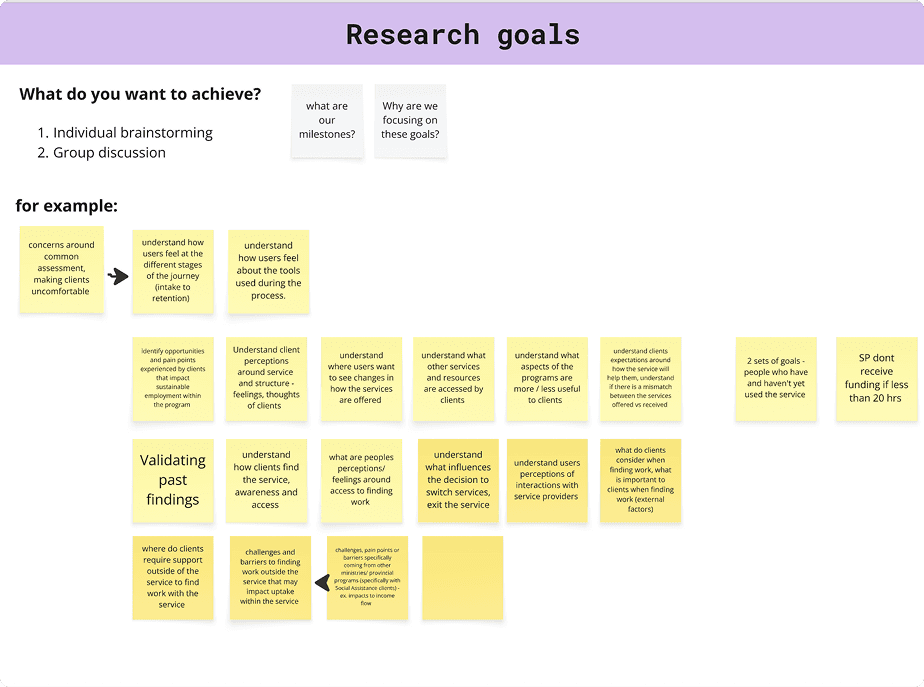
From this baseline, we worked with the team to solidify research objectives and derive a participant profile for the people we wanted to talk to in interviews. It was important to us to thoroughly discuss objectives and the people we wanted to talk to because our client team was included many stakeholders with different backgrounds (policy advisors, senior directors, front line staff etc.). We needed to make sure everyone was aligned on next steps.
Some of our research objectives and participant profile considerations included:
Research objectives
Participant profile
A few things stuck out to us as we were thinking about planning how to run interviews with people with disabilities. We learned that:
Running research studies that make sense
Our project background had many interesting implications on the way we planned and ran our studies. Normally we recruit participants through an online screening survey with a number of questions that determine eligibility. The screener is distributed digitally and prompts interviewees to sign up for a virtual interview session run on zoom. Some of the ways we adjusted our normal processes included:
Outcome and Impact: inclusivity drives impactful change
This has to be one of my favourite projects I’ve ever done. We did a total of 30 interviews (a lot for a qualitative study). The number of interviews was larger than usual because we wanted to make sure we had representation from a diverse array of people. I loved this project because we got to engage single mothers, recent immigrants and people with diverse disabilities to learn the raw and impactful truth behind their stories. My favourite type of work is truly the work that has the most impact, I think this came through in this project through the experiences we heard from.
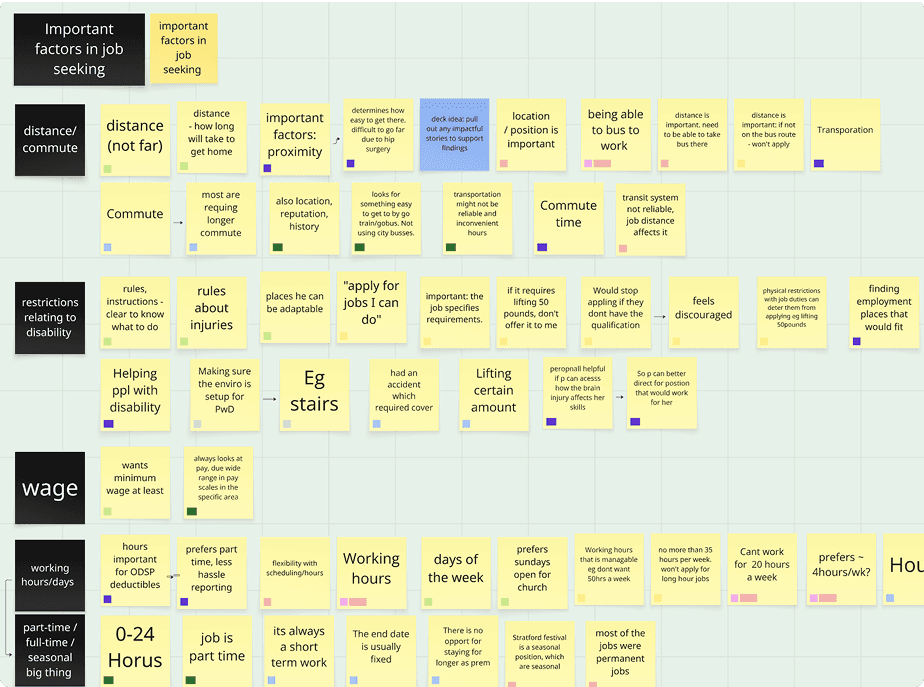
Here are examples of the insights we were able to pull from our research:
Participants’ understanding of employment services was often shaped by informal or anecdotal sources, rather than clear, authoritative information. Many participants were unaware of the specific supports available unless they had been given a list of options. For example, we heard from a person with a hearing disability was not aware of any funding available for hearing aids at the employment service they accessed.
Unless they had previous positive experiences or were working with a disability-specific employment service provider, many participants were unsure about how and when to disclose their disability, either to the service provider or to prospective employers. Many wished for more guidance and information about this from their employment service provider.
Many participants described being fueled by hope, while also noting that discouragement can significantly hinder progress. Fear of rejection emerged as a common barrier, affecting motivation and willingness to apply for jobs. Several reported low energy and a general lack of drive, particularly when facing repeated setbacks or unclear guidance. One participant explained that they began applying to jobs they didn’t want, to feel some kind of progress or boost their confidence. Another described the feeling of being a burden when opportunities offered didn’t match their skills and abilities.